24 October 2026 · 7 min read
Social Media for Boutique Hotels: Looking Professional Without a Social Media Team
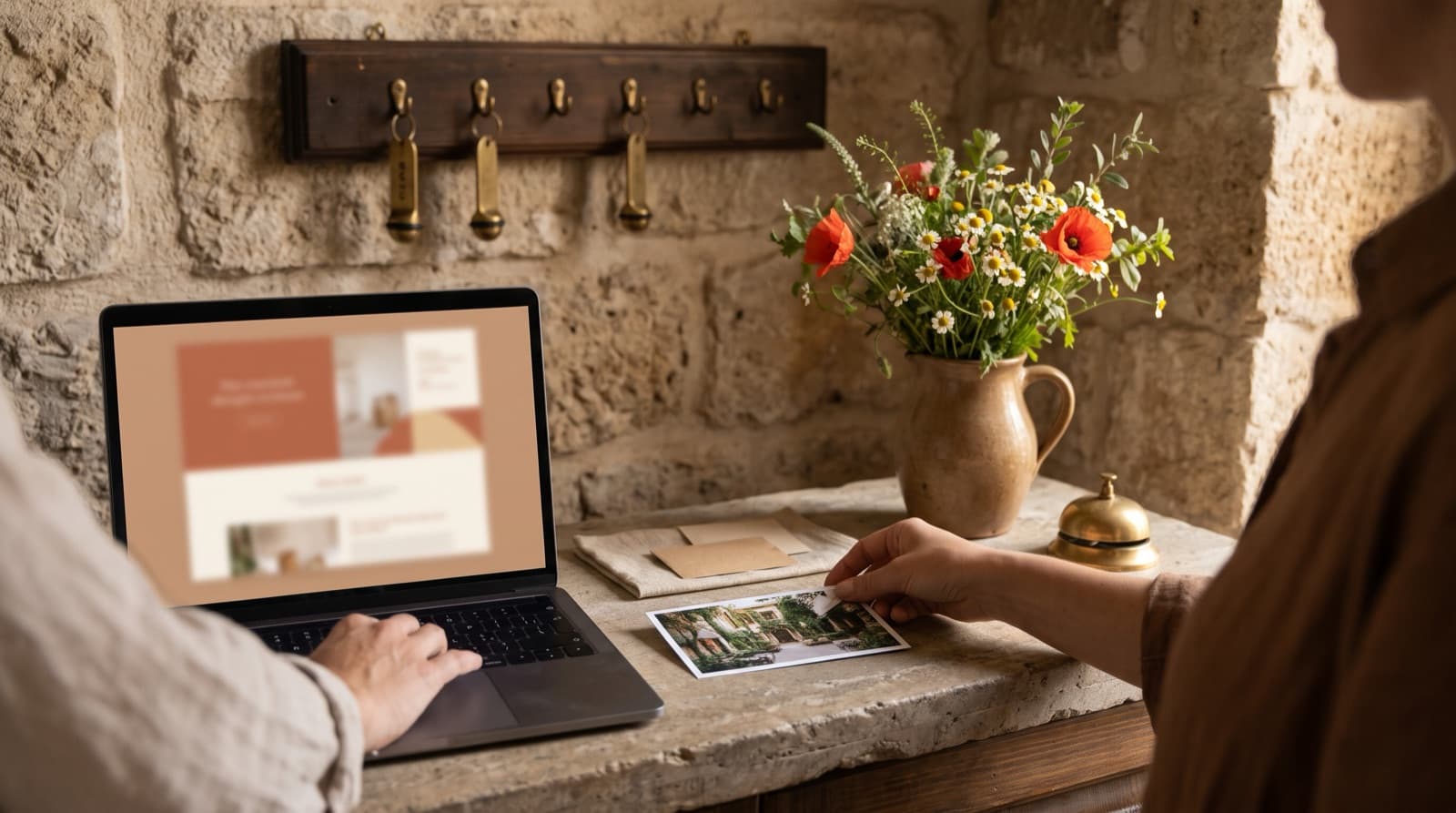
In a boutique hotel, social media is rarely anyone's full-time job. More often it's the owner posting between check-ins, or a receptionist who "is good with Instagram" fitting it in around everything else. That isn't a problem in itself — the people closest to the guests often have the best material.
The problem is what happens without a system. Every post is designed from scratch, in whatever style feels right that day, and within a few months the feed looks like it belongs to several different hotels.
The short version: a boutique hotel doesn't need a social media team to look professional. It needs a proper brand kit set up once, a paid design tool to hold it, and short training so whoever posts can produce on-brand content in minutes. The one thing it can't afford is generic, free templates — they make a characterful property look cheap.
This guide expands on the boutique section of which social media platforms suit which hotels.
Key takeaways
- Small teams need systems, not talent. A prepared brand kit lets anyone post consistently.
- Free templates are a false economy. Generic designs make a boutique brand look like everyone else's — and cheaper than it is.
- A minimum investment protects the brand. However small the hotel, its brand deserves at least a paid tool and a proper setup.
- Training matters as much as design. Short video walkthroughs turn a brand kit into something the team will actually use.
- Different guests need different signals. One group of boutique hotels saw engagement rise within a season after building separate kits for separate audiences.
The minimum design kit for a small team
When a boutique hotel asks me how to keep social media professional without hiring anyone, I recommend two things.
1. A paid design tool with the brand already built in
Tools such as Canva are perfectly capable of producing professional hotel content — in their paid versions, set up properly. A Pro subscription lets a designer build a complete brand kit inside the tool: the hotel's exact colours, its fonts, its logo versions, and a set of custom templates designed specifically for the property.
Once that's in place, whoever is posting doesn't need to make design decisions. They open the hotel's own template, drop in a photo, change the text, and the result already looks like the brand.
2. Short, practical training
A brand kit only works if people know how to use it. So alongside the setup, I prepare short tutorials — screen-share videos showing exactly how to create each type of post, Story and offer graphic step by step.
Videos work better than a written manual because the person posting can watch over the specific task they're doing right now. A new team member can pick it up quickly, without needing a designer on the phone every week.
Together, these two steps mean a team of one or two can produce consistent content that genuinely represents the brand — every time, not only when the "creative" person is on shift.
Why free templates cost more than they save
Here is the distinction that matters: a brand kit built for your hotel is not the same thing as a template anyone can use.
Free templates on design platforms are used by thousands of businesses. Their layouts, fonts and decorative elements are instantly recognisable to anyone who spends time on social media. When a boutique hotel builds its posts from them, the effect is the opposite of what boutique branding is for: the property looks generic, and slightly cheap.
There is a real gap between free and paid versions of these tools — in fonts, in assets, in the ability to lock your own colours and templates. Bridging it costs very little compared with almost any other marketing spend.
However small or independent your hotel is, its brand deserves at least that minimum investment to stay professional. A boutique hotel's whole advantage is character. Generic templates quietly erase it.
What makes a boutique hotel's personality come through
Boutique hotels compete on character rather than scale — it's the core idea behind great boutique hotel branding. On social media, that character comes through when:
- The visual identity is specific. Colours, type and image style chosen for this property and no other.
- The content shows what's genuinely different. The building, the neighbourhood, the breakfast, the people who run it.
- The voice is consistent. The same tone in every caption, whoever writes it.
And it gets lost in predictable ways: borrowing the look of big chains, falling back on generic templates, or letting every new staff member reinvent the style. The fix for all three is the same — a defined identity, captured in tools and rules the team can follow. A short brand book does exactly this, even for a ten-room property.
A real example: six hotels, three identities
One of the most useful projects I've worked on involved six boutique properties owned by the same group of companies.
The group had decided to segment its guests by the kind of holiday they were looking for, so the six hotels sat in three distinct lines:
- Adults-focused hotels for couples travelling without children, many of them middle-aged.
- Family hotels built around children and shared holidays.
- City-centre hotels for guests who wanted to be in the middle of things.
One shared social media style couldn't speak convincingly to all three audiences. What reads as calm and romantic to a couple can feel dull to a family; what feels lively to a family can feel chaotic to a couple looking for quiet.
So we created three distinct brand kits, one for each line. Before designing them, we researched what each audience responded to — including short questionnaires asking potential guests which images, colours, fonts and messages resonated with them. The kits were then built from those answers, not from our own assumptions.
Within one summer season, the results were clear. Engagement increased, and people talked noticeably more about the brands. The content had started speaking to the right people in the right visual language.
The lesson for any boutique hotel: know exactly who your guest is, and design for them specifically. Even a single property usually has one core guest it serves best — and a feed designed for that guest will always outperform one designed for everybody.
Getting started
If your social media currently depends on whoever has the login that day, the order of work is simple:
- Define the identity — colours, fonts, logo versions and image style. If these aren't settled yet, start with the brand identity foundations.
- Build the brand kit in a paid design tool, with templates for your most common post types.
- Record short tutorials for each template.
- Review the feed monthly to catch drift early.
For the broader principles of hotel feeds — grid consistency, content pillars, what turns followers into bookings — see hotel social media design and hotel social media content.
Frequently asked questions
How can a small hotel manage social media without a dedicated team? Set up a brand kit once — colours, fonts, logo and custom templates — in a paid design tool, and give the team short video tutorials for each type of post. Anyone who posts can then produce consistent, on-brand content in minutes.
Is Canva good enough for hotel social media? It can be, in its paid version with a properly built brand kit and templates designed specifically for the hotel. Generic free templates are the problem: they're widely recognised and make a boutique property look cheap.
What should be in a hotel's social media brand kit? Exact brand colours, fonts, logo versions, a set of custom templates for common post types (posts, Stories, offers, events), and guidance on photo style and tone of voice.
How do boutique hotels stand out on Instagram? By showing what's genuinely specific to the property — the building, the location, the people, the details — in a consistent visual identity designed for their core guest, rather than copying the look of larger chains.
Should a hotel group use one social media style for all its boutique properties? Not if the properties serve different guests. When one group created separate brand kits for its adults-focused, family and city-centre hotels, engagement rose within a single season.
Looking for a designer for your boutique hotel?
I build brand kits and social media systems for boutique hotels — designed for your guests, and simple enough for a small team to use every day. If your feed doesn't yet show what makes your property different, get in touch.
Looking for a designer for your hospitality brand?
Elina Imre is a senior graphic designer specialising in brand identity for hotels and resorts, available for part-time and freelance projects.
Get in touch