22 June 2026 · 4 min read
Hotel Social Media Design: Building a Feed That Drives Bookings
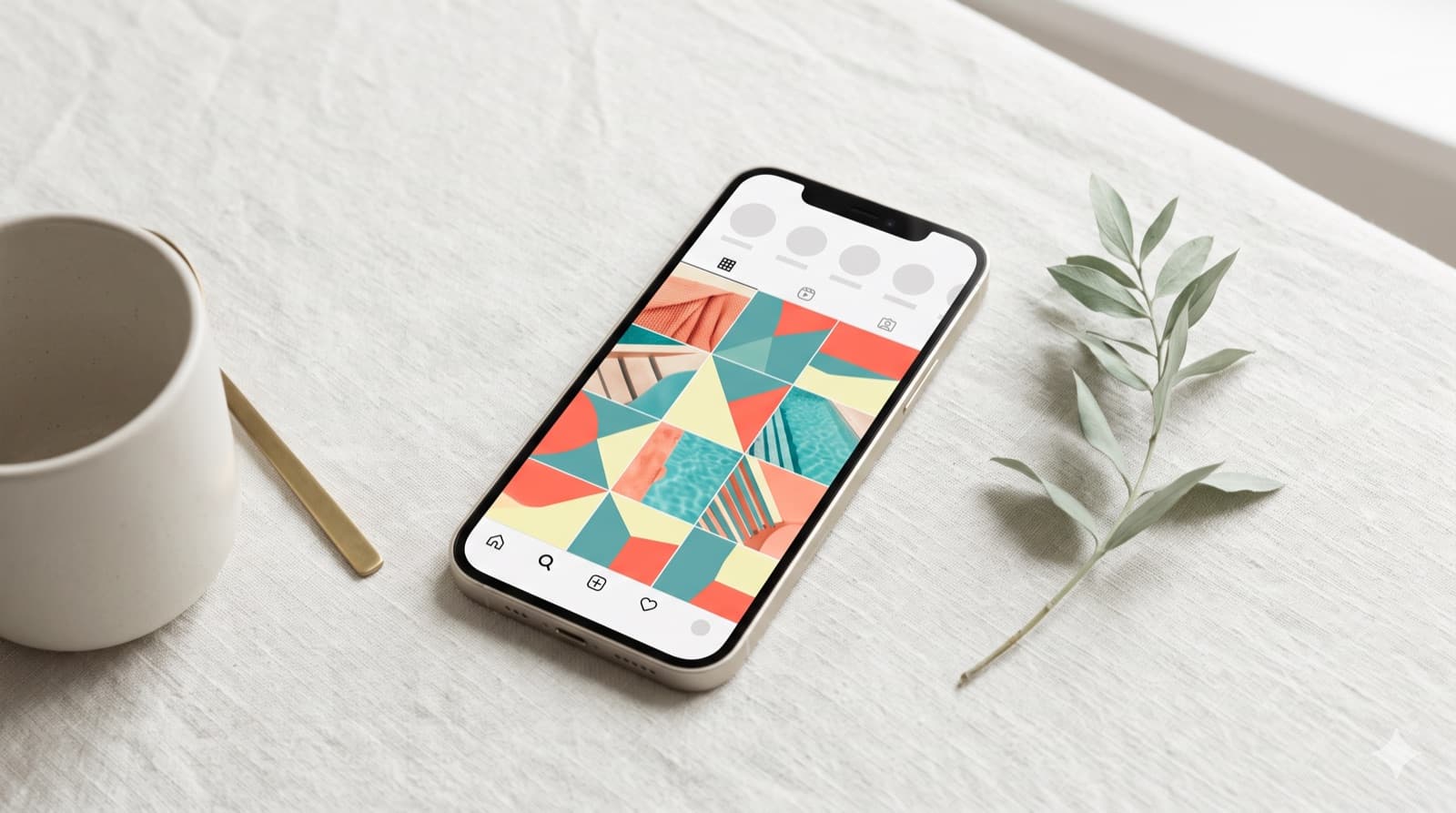
Most hotels treat social media as a content problem: what do we post today? The hotels that actually win bookings from social treat it as a design problem: what does our feed make people feel in the half-second before they keep scrolling?
In a feed full of competing images, a traveller decides whether your hotel looks like "somewhere I'd want to be" almost instantly — and that judgement is visual. Strong hotel social media design is what turns a casual scroll into a saved post, a profile visit, and eventually a direct booking.
Your feed is your second homepage
For a huge share of travellers, your Instagram grid is the first real impression of your property — seen long before your website. They find you through a friend's tag, a location pin, or a hashtag, and they judge the whole experience from nine thumbnails.
That means your feed isn't a marketing afterthought; it's a storefront. And like any storefront, it works when it's designed with intention and falls flat when it's a random pile of phone photos and stock graphics.
Design flows from brand, not the other way around
Before any post is created, the visual system has to exist. This is exactly why social media design should grow out of a hotel's brand identity — the same colours, typography, and tone that appear on your signage and website should carry through every post. When the brand is clear, social design becomes fast and consistent. When it isn't, every post is a fresh argument about fonts.
The building blocks of strong hotel social media design
1. Visual consistency across the grid
The grid is seen as a whole before any single post is read. A consistent palette, recurring layouts, and a steady photographic style make the grid feel curated and premium. Inconsistency — three different fonts, clashing filters, random colours — reads as amateur, no matter how nice the hotel actually is.
2. A small set of reusable templates
The hotels that post consistently aren't working harder; they're working from templates. A handful of well-designed, on-brand layouts — for offers, quotes, event announcements, and "good morning from the property" posts — means new content takes minutes, not hours, and always looks coherent.
3. Photography direction
Great hospitality photography isn't just "nice pictures." It's a consistent point of view: the same warmth, the same light, the same framing that makes every shot recognisably yours. Design ties these images together with consistent crops, overlays, and typographic treatments.
4. Typography that travels
The fonts from your brand should appear in your social graphics — not whatever the app suggests. Legible, on-brand type on offers and announcements is one of the fastest signals of a professional operation.
Content pillars that work for hotels
Design is the how; content pillars are the what. A reliable mix for hospitality:
- The property — rooms, spaces, architecture, details
- The location — the destination, neighbourhood, things to do nearby
- The experience — food, spa, sunsets, the feeling of being there
- The people — staff, guests, stories, behind-the-scenes
- The offer — packages and seasonal promotions (the minority, not the majority)
Designing each pillar to a consistent visual standard is what makes the feed feel like one story rather than scattered announcements.
Design for bookings, not just likes
Likes feel good; bookings pay the bills. A few design decisions move social from vanity to revenue:
- Make the path obvious. A clear, well-designed bio, a working booking link, and consistent calls-to-action turn interest into clicks.
- Design for saves and shares. Genuinely beautiful or useful posts (a local guide, a stunning view) get saved and shared — which extends reach far beyond your followers.
- Keep offers on-brand. A promotion that looks like a discount flyer cheapens the brand. A promotion that looks like the rest of your premium feed protects your rates.
A simple starting point
If a hotel's social feed feels inconsistent, the fix usually isn't more posting — it's a small design system: a defined palette, two or three fonts, a set of templates, and a clear photographic direction. Put that in place, and consistency stops being a daily struggle.
Social media is where most travellers will meet your hotel first. Designing that first impression deliberately — rather than leaving it to whoever is free that afternoon — is one of the highest-leverage things a hospitality brand can do.
Elina Imre is a senior graphic designer specialising in brand identity and social media design for the travel and hospitality industry, working across Europe and beyond.
Looking for a designer for your hospitality brand?
Elina Imre is a senior graphic designer specialising in brand identity for hotels and resorts, available for part-time and freelance projects.
Get in touch