21 June 2026 · 4 min read
What Makes Great Boutique Hotel Branding
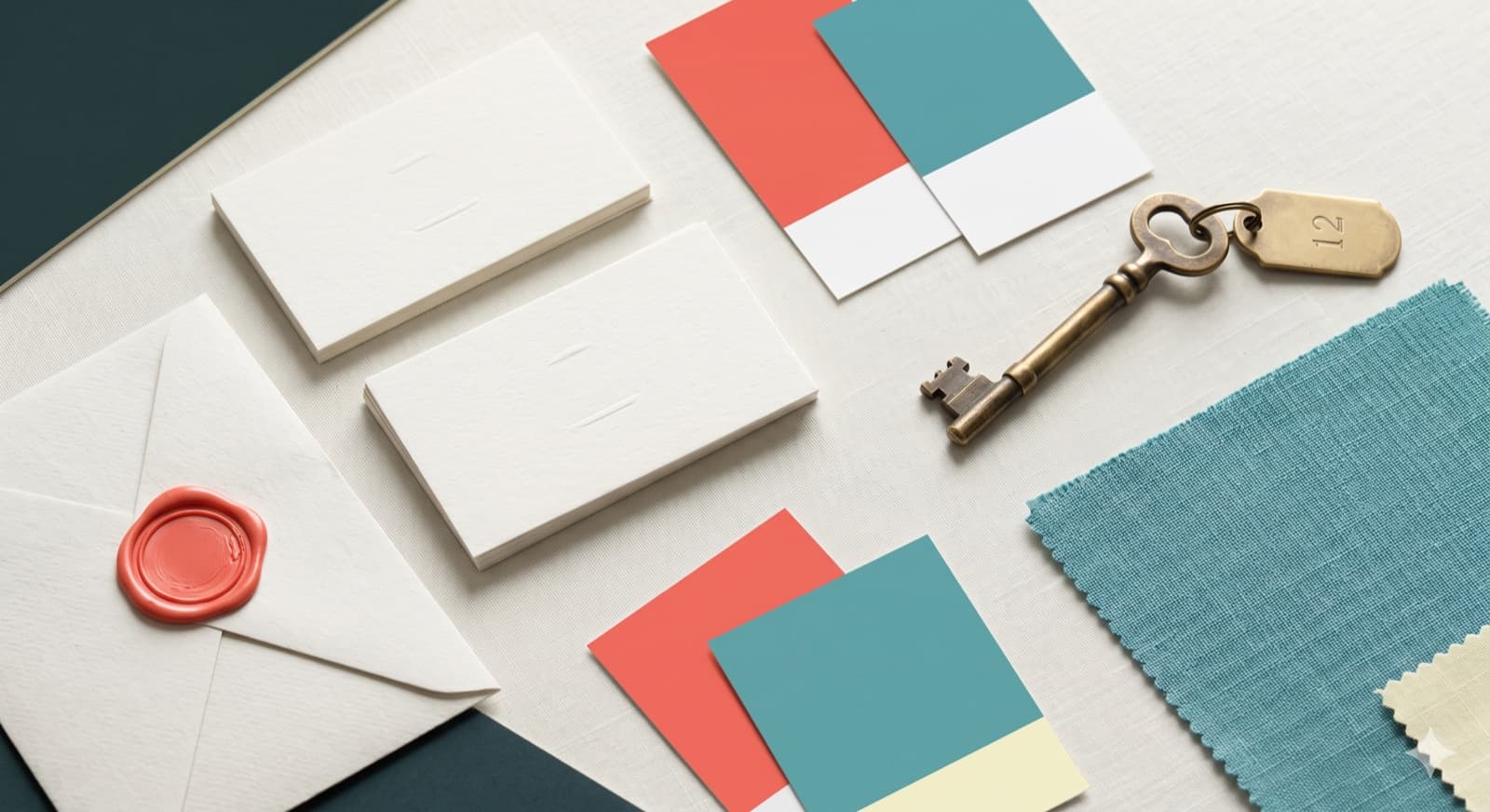
A boutique hotel lives or dies by the feeling it creates. Unlike a large chain that competes on consistency and scale, a boutique property competes on character — and that character has to be felt before a guest ever walks through the door. That is the real job of boutique hotel branding: to translate a one-of-a-kind place into something a traveller can recognise, trust, and fall for from a single photo on their phone.
After years designing brand identities for hotels and resorts, I've found that the properties with the strongest brands aren't always the ones with the biggest budgets. They're the ones that understand what branding actually is — and what it isn't.
Branding is not just a logo
The most common misconception is that a hotel's brand is its logo. A logo matters, but it's only one note in a much larger composition. Strong boutique hotel branding is a complete visual and verbal system: the typography on the menu, the colour of the welcome card, the tone of the confirmation email, the texture of the key card, the way the property photographs at golden hour.
When all of these elements share one coherent identity, the guest experiences something rare — a place that feels intentional. When they clash, even a beautiful hotel feels generic.
The four pillars of a memorable hotel brand
1. A clear brand story
Every great boutique hotel can answer one question in a single sentence: why does this place exist? Maybe it's a restored 19th-century townhouse, a family-run coastal retreat, or a design-led escape built around slow mornings. That story should shape every design decision that follows. Branding without a story is just decoration.
2. A distinctive visual identity
This is where design does its work. A strong visual identity includes a logo, a typographic system, a colour palette, and a library of supporting elements — patterns, icons, photography direction. The goal isn't to be loud; it's to be unmistakable. A guest should be able to glance at an Instagram post, a printed brochure, and a room-service menu and instantly know they belong to the same hotel.
3. Consistency across every touchpoint
A boutique hotel brand appears in dozens of places: the website, the booking confirmation, the signage, the staff uniforms, the social media feed, the in-room collateral. Consistency across all of them is what builds recognition and trust. This is also where many independent hotels lose ground — the website looks premium, but the printed menu was designed by someone else, in a different font, two years later. The brand fragments, and so does the impression.
4. Flexibility for the real world
Great branding survives contact with reality. The identity has to work on a tiny favicon and a large lobby wall, in print and on screen, in peak-season campaigns and quiet off-season newsletters. A well-built brand system anticipates these needs and gives the hotel a toolkit, not just a single static logo.
Why design pays for itself in hospitality
In hospitality, branding is not a cosmetic expense — it's a commercial tool. Strong visual identity supports direct bookings, reducing reliance on online travel agencies and their commissions. It justifies a higher room rate by signalling quality before a guest ever experiences it. And it earns the kind of organic social sharing that no advertising budget can buy, because guests love to be associated with places that look and feel special.
For a boutique property, where every booking carries more weight than it would for a 500-room chain, that advantage compounds quickly.
Getting boutique hotel branding right
If you're refreshing or building a hotel brand, a few principles tend to separate the memorable from the forgettable:
- Start with the story, not the logo. Design decisions are easy once you know what the place stands for.
- Design the whole system, not just the centrepiece. Plan for print, digital, signage, and social from day one.
- Protect consistency. A simple brand guideline keeps every future menu, post, and campaign on-brand.
- Think about how it photographs. In 2026, a hotel's brand is experienced on a screen long before it's experienced in person.
Boutique hotel branding, done well, is quiet confidence made visible. It tells a traveller — before they've read a single review — that this is a place worth choosing.
Elina Imre is a senior graphic designer specialising in brand identity, print, and digital design for the travel and hospitality industry, working across Europe and beyond.
Looking for a designer for your hospitality brand?
Elina Imre is a senior graphic designer specialising in brand identity for hotels and resorts, available for part-time and freelance projects.
Get in touch