4 July 2026 · 9 min read
Which Social Media Platforms Work Best for Each Hotel Type
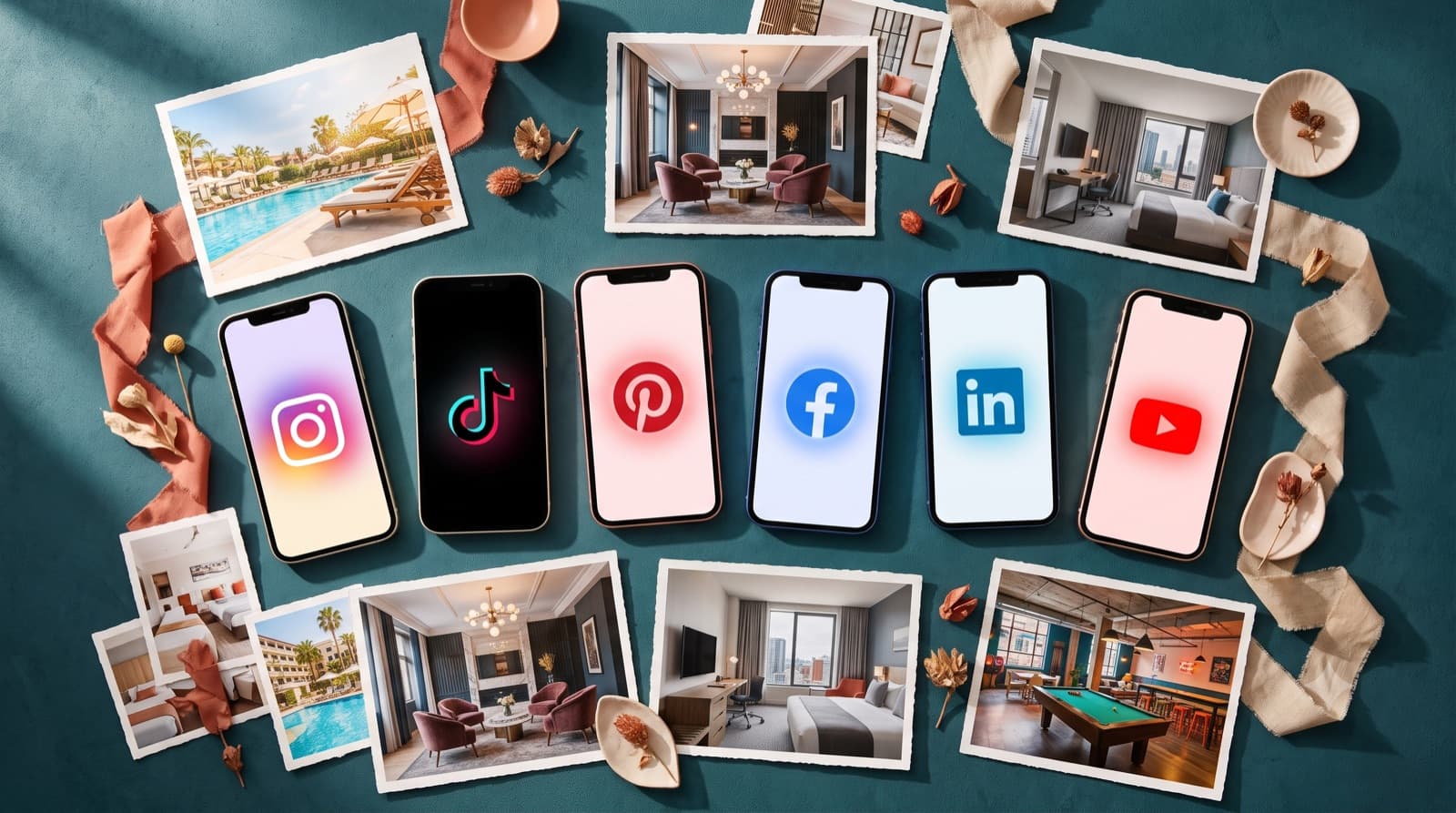
Not every hotel should be on every platform — and not every platform works the same way for every type of property. A luxury resort and an airport hotel are selling completely different experiences to completely different guests, and those guests are in completely different places online.
Spreading a hotel's social media effort evenly across five platforms rarely works. Concentrating it on the two or three that genuinely match the property type almost always does.
The short version: match the platform to the traveller, not to what the marketing team finds easiest to manage. The right platform for your hotel type is the one where your future guests are already deciding where to go.
How each major platform behaves in hospitality
Before mapping platforms to hotel types, it helps to understand what each is actually good at for travel brands:
- Instagram functions as a visual search engine for travel. Carousels are the top-performing format at 3.7% engagement; overall hospitality engagement peaks at 3.52% with two posts per week. 57% of leisure travellers research via Instagram before booking.
- TikTok is the highest-growth platform in hospitality — 18.75% weekly follower growth for travel brands, with 89% of Gen Z discovering destinations through it. 32% of users have booked a hotel directly after seeing TikTok content. CPM is also lower than Meta at $4.67 vs $6.59.
- Pinterest reaches travellers at the planning stage. 87% of users have made a purchase decision based on something they found on Pinterest, and "Dream Destination" searches grew 100% year-on-year. High intent; longer consideration window.
- Facebook has low organic engagement (0.15% benchmark) but remains essential for retargeting, loyalty programme communication, and older leisure demographics. Facebook Display ads convert hospitality clicks at 3.21% — well above generic display.
- LinkedIn is a niche but high-value channel for business-traveller-facing properties, with 2.5% engagement and a direct line to the corporate travel decision-maker.
Luxury and destination resorts
Primary platforms: Instagram, Pinterest, TikTok
Luxury resort guests are buying a feeling — and feelings are decided visually, often months before the trip. Instagram and Pinterest are where that decision begins. Professional photography of suites, pools, spa, fine dining, and the surrounding landscape works exceptionally well here; Four Seasons built its global social presence on this principle, using image quality alone to signal exclusivity.
TikTok is increasingly relevant even at the luxury tier. Hilton's successful campaign repositioned the brand with Gen Z by showing authentic hotel experiences — not corporate imagery, but real moments guests want to be part of. All-inclusive and destination resorts should treat TikTok as the place to capture the feeling of being there: sunsets, arrivals, the energy of the pool deck, a chef at work.
Pinterest deserves specific attention for resorts because 55% of travel searches on the platform lead directly to property closeups — which means a well-optimised resort profile captures guests who are actively envisioning the trip, not just scrolling.
What to avoid: heavy Facebook investment for organic content, and LinkedIn unless the resort also targets corporate retreat business.
Boutique hotels
Primary platforms: Instagram, TikTok
Boutique properties win on character. Instagram Stories and posts are the natural home for the things that make a boutique hotel different: the locally sourced breakfast, the owner who greets every guest, the room that was clearly designed by someone who cared. Personal narrative outperforms corporate messaging here — and that is an advantage boutique hotels have over chains.
TikTok suits boutique hotels well precisely because its algorithm favours authentic, low-production content. A 30-second walk-through of an unusual room, a staff member explaining the history of the building, or a guest's genuine reaction performs better than polished brand video on this platform.
The visual identity of a boutique property is the engine that makes social work: when the brand is distinctive, every post reinforces recognition. When it isn't, no amount of posting fixes the inconsistency.
City and business hotels
Primary platforms: LinkedIn, Facebook, Instagram
Business travellers are a different audience entirely. They are not browsing Pinterest for dream destinations; they are checking LinkedIn between meetings and deciding where to stay based on location, loyalty points, and reliability. LinkedIn at 2.5% engagement is a meaningful channel for reaching this segment directly — content about meeting facilities, express check-in, breakfast quality, and transport links performs better than lifestyle imagery.
Facebook's strength here is retargeting. Business travellers visit a hotel's website, don't book immediately, and are brought back by a well-placed retargeted ad. Facebook Display converts hospitality clicks at 3.21%, making it genuinely useful for the consideration stage. Facebook also remains the dominant platform for the 45+ leisure traveller segment — city hotels that also rely on weekend leisure trade should maintain a presence there.
Instagram matters for city hotels, but the content brief changes: proximity to landmarks, room quality, and the guest experience matter more than aspirational lifestyle. Consistent design across every post is especially important for city hotels competing in dense markets where a professional feed signals reliability before a guest clicks the website.
Airport hotels
Primary platforms: Facebook, LinkedIn, Google (not social but worth noting)
Airport hotels are solving a problem, not selling a dream. The guest has a 6am flight, a long connection, or a delayed departure — they need to know you exist, you are close, and you are easy to book. Social media is less powerful here than search and retargeting, but Facebook's ability to serve ads to people who have recently searched for flights or browsed booking platforms makes it the most useful social channel.
LinkedIn reaches corporate travellers who are the core audience for airport properties. Content that emphasises convenience, business amenities, and proximity to terminals performs better than lifestyle photography.
TikTok and Pinterest are low priority for airport hotels — the traveller mindset in that moment is transactional, not inspirational.
Budget hotels and hostels
Primary platforms: TikTok, Instagram
Budget properties and hostels have an advantage that luxury brands spend years trying to recreate: authenticity. TikTok's preference for genuine, unpolished content is ideal for showing real rooms, real prices, and real guest experiences. User-generated content — guests tagging the property, posting their own tours — is trusted more than branded content in this segment and should be actively encouraged.
Instagram works well for budget properties that have invested in design: a cleverly decorated hostel common room, a surprisingly stylish private room, or an impressive rooftop are the kinds of images that drive saves and follows from young travellers who research on Instagram before booking.
The budget segment should track TikTok most closely because 32% of users in this age group (primarily 18–34) have booked accommodation directly from TikTok content — a conversion path that does not require the property to compete on advertising spend.
All-inclusive resorts
Primary platforms: TikTok, Instagram, Pinterest
All-inclusive guests are planning a very specific kind of trip — maximum enjoyment, minimum friction — and they research it extensively before committing. This is a segment that belongs on all three visual platforms. Pinterest captures the inspiration and planning phase. Instagram holds the aspiration — the pool bar, the beach access, the restaurant quality. TikTok converts younger travellers who want to see whether the reality matches the brochure.
Marriott's "30 days, 30 stays" TikTok campaign is the clearest proof of this format working at scale for an all-inclusive audience — generating massive user-generated content and 100 million impressions through creator content rather than traditional advertising.
A note on what comes next
Each of these hotel types deserves its own deep-dive: which content works best on each platform, how to grow a following from scratch, what to post and when. The framework here is the starting point — the specific tactics for resorts, boutique properties, city hotels, and budget properties are a longer conversation.
What does not change across any of them: the design quality of the content and the consistency of the visual brand determine whether the right platform actually delivers results. Platform choice gets you in front of the right audience. Design and content quality are what make them stop scrolling.
Key takeaways
- Match platform to traveller, not to convenience. Luxury and resort guests are on Instagram and Pinterest. Gen Z and budget travellers are on TikTok. Business travellers are on LinkedIn and Facebook.
- TikTok is the highest-growth channel in hospitality (18.75% weekly follower growth) and the most direct path to Gen Z bookings — 32% have booked directly from TikTok content.
- Pinterest captures high-intent planners: 87% of users have made a purchase decision from the platform, and it performs especially well for resorts and all-inclusive properties.
- Facebook's value is retargeting, not organic reach. Essential for business hotels and city properties; less relevant for luxury or youth-facing segments.
- Boutique hotels win on authenticity — Instagram and TikTok reward the things that make boutique properties distinctive. Lean into character, not production value.
Frequently asked questions
Which social media platform is best for hotels? It depends on the hotel type. Luxury resorts and boutique hotels perform best on Instagram and Pinterest. TikTok is the highest-growth channel for all-inclusive, resort, and budget properties targeting younger travellers. Business and city hotels get the most value from LinkedIn and Facebook retargeting.
Should hotels be on TikTok? Most hotels should consider it. TikTok delivers 18.75% weekly follower growth for hospitality brands and 32% of its users have booked a hotel directly after seeing content there. Luxury properties should approach it carefully — authenticity matters more than production value, but the tone needs to fit the brand.
Is Instagram still worth it for hotels? Yes — Instagram functions as a visual search engine for travel decisions. 57% of leisure travellers research via Instagram before booking, and carousels deliver 3.7% engagement, the highest of any static format. It remains the core visual platform for almost every hotel type.
Do business hotels need social media? Yes, but with a different strategy. LinkedIn reaches corporate decision-makers directly. Facebook retargeting converts business travellers who have already shown intent. Organic Instagram is lower priority than for leisure properties.
What is the ROI of hotel social media? Hotels with a data-driven social strategy report 45% higher ROI than those without one. Direct bookings from social channels save 15–25% in OTA commissions — approximately $3,000–$10,000 per month for a property generating 20 direct bookings.
Elina Imre is a senior graphic designer specialising in brand identity and social media design for the travel and hospitality industry, working across Europe and beyond.
Looking for a designer for your hospitality brand?
Elina Imre is a senior graphic designer specialising in brand identity for hotels and resorts, available for part-time and freelance projects.
Get in touch