26 June 2026 · 5 min read
AI in Hotel Branding: A Tool, Not a Replacement
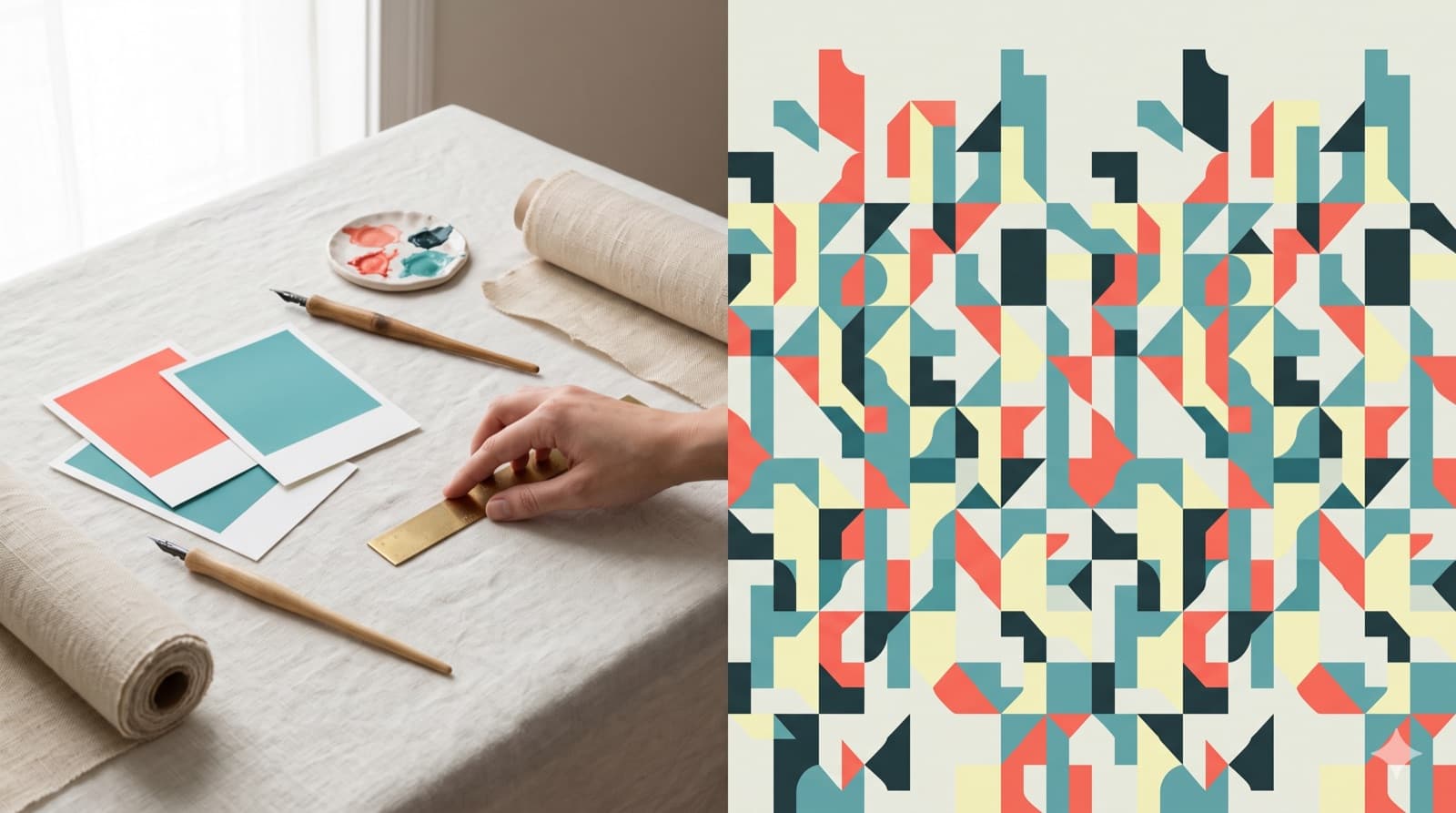
A few years ago, a brand needed a designer to get a decent logo. Today, anyone with a ChatGPT subscription can generate fifty in an afternoon. The tools are genuinely impressive — fast, cheap, and tireless. But a subscription isn't training, and that gap is starting to show up on hotel Instagram feeds everywhere.
This isn't an argument against AI. It's an argument for knowing exactly what job it's good at — and what job it isn't.
The short version: AI is a brilliant tool for hotel branding, and a poor replacement for design judgement. The brands that win with it never confuse the two.
Where AI genuinely helps in hotel branding
Used well, AI has earned its place in a hospitality brand's toolkit. It's brilliant for:
- Speed on volume work. Drafting a month's worth of social media captions or post ideas in minutes instead of days.
- Early-stage ideation. Generating quick mood directions or concept sketches to react to, before any real design work begins.
- First drafts of copy. A rough starting point for menus, emails, or website text that a human then shapes and fact-checks.
- Exploring options fast. Testing ten directions in the time it used to take to sketch one.
For a brand owner juggling everything, that speed is real value. The mistake isn't using AI — it's assuming that because the output looks finished, it is finished.
Why AI design usually looks "almost right"
A subscription gives you output, not judgement. And the results are usually easy to spot: generic typography, colours that clash with the rest of the brand, layouts that almost work but don't quite hold together, a logo that looks impressive in isolation and falls apart the moment it's printed on a menu next to last year's signage.
It rarely looks bad on first glance. It looks almost right — which is actually the more dangerous outcome. A brand that looks unprofessional in an obvious way gets fixed quickly. A brand that looks "fine" but quietly inconsistent erodes trust slowly — the same way a rebrand done carelessly can confuse guests instead of impressing them.
What AI doesn't know about your brand
AI doesn't know your brand. It doesn't know that your palette was chosen to read as calm to one market and as cold to another, or that the typeface you've used for three years carries recognition you'd lose by swapping it for whatever looks trendiest this week. It has no memory of your brand guidelines, no sense of what your competitors already did to death, and no instinct for the small adjustments — a kerning fix, a colour shifted by two shades — that separate "professional" from "almost."
That instinct is the actual job. Anyone can ask for a logo. A trained eye knows why one version works for a boutique resort and the other quietly undermines it.
How to use AI in hotel branding the right way
The brands getting this right treat AI as a first-draft machine, not a decision-maker:
- Use it to generate options, not final assets. Let AI produce ten directions or a dozen caption ideas — treat them as raw material, not finished work.
- Bring the raw material to a professional. A designer's job becomes editing and elevating, not starting from a blank page — often faster, and always sharper.
- Run everything through your brand guidelines. If it doesn't match the established colours, type, and tone, it doesn't go live — no matter how good it looked in the prompt window.
- Keep the final execution human. Print-ready files, colour accuracy, and layout consistency across every touchpoint — this is where AI output most often falls apart, and where professional finishing earns its cost.
The payoff
Brands that use AI this way get the best of both: speed where speed matters, and judgement where judgement matters. Brands that skip the second half end up with a feed full of content that's technically on-brand and somehow still feels off — generic, slightly mismatched, easy to scroll past.
To be a tool, or not to be a replacement for design judgement — that's not really a hard question. AI is genuinely both useful and limited, just not in the way most subscriptions promise.
Key takeaways
- AI is excellent for speed and first drafts — captions, ideation, rough concepts, exploring directions.
- AI output usually looks "almost right," which quietly erodes brand trust over time.
- AI has no memory of your brand — palette logic, type recognition, or cross-touchpoint consistency.
- Use AI to generate options, then have a professional edit, finish, and quality-check every asset against your brand guidelines.
Frequently asked questions
Can AI replace a graphic designer for a hotel? No. AI is a powerful first-draft tool, but it lacks brand memory and design judgement. The designer's role shifts to editing, finishing, and protecting consistency — which is where a brand's value is actually preserved.
What is AI actually good for in hotel branding? Speed on volume work (social captions and post ideas), early ideation, first drafts of copy, and quickly exploring multiple directions — all as raw material for a human to refine.
Why does AI-generated design often look "off"? Because it optimises for what looks plausible in isolation, not for consistency with your existing palette, typography, and brand guidelines. The result usually looks "almost right" rather than wrong — which is harder to catch and slower to erode trust.
Elina Imre is a senior graphic designer specialising in brand identity and design for the travel and hospitality industry, working across Europe and beyond.
Looking for a designer for your hospitality brand?
Elina Imre is a senior graphic designer specialising in brand identity for hotels and resorts, available for part-time and freelance projects.
Get in touch